


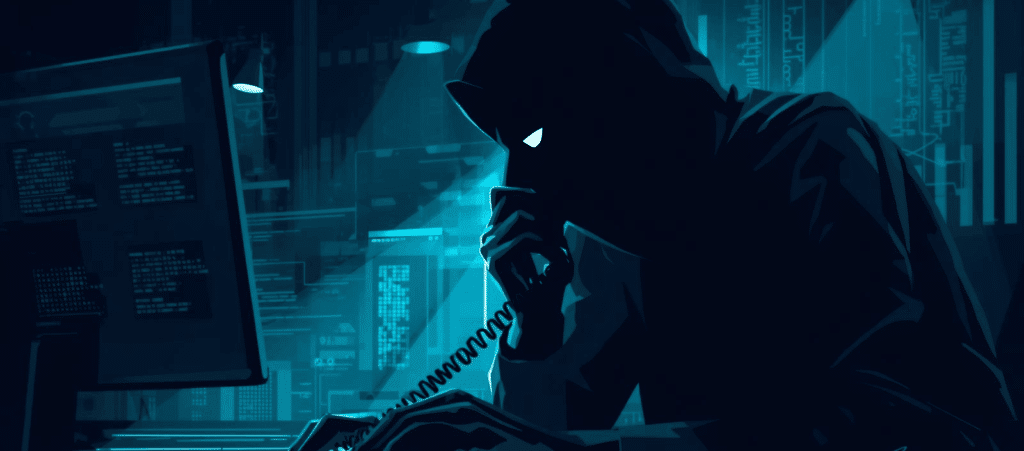
Your employees answer calls all day, and attackers use that access to strike where defenses feel thin.
A convincing voice can bypass filters, exploit urgency, and pull someone into a high-risk decision before they spot the setup. Security teams track phishing trends across email and chat, yet vishing attacks often slip into conversations that appear normal.
Attackers use phone calls, Voice over Internet Protocol platforms (VoIP) platforms, and spoofed numbers to steal credentials or gain internal access. They build pressure, use insider language, and adjust their tactics on the fly. Employees trust voices more than unexpected messages, and that instinct creates a direct path into your environment.
Hybrid work expands that path. Staff juggle personal devices, remote calls, and rapid context switching, which provides attackers with more opportunities every week. Bring Your Own Device (BYOD) policies widen the gap, as personal phones fall outside standard oversight.
This threat targets individuals, responds in real-time, and evolves with every shift in communication habits.
Key drivers behind the surge:
- Wider phone exposure across distributed teams
- Heavy reliance on personal devices
- Accessible caller ID spoofing tools
- Attackers who adjust their pitch mid-call
The rest of this guide breaks down how these attacks work, why they succeed, and how your teams can shut them down.
Anatomy of a Vishing Attack
Attackers follow a clear sequence when they run a vishing campaign. Each step builds control over the conversation and pushes the target toward a risky action.
1. Reconnaissance
2. Spoofing and Automated Dialing
Attackers use caller ID spoofing tools to impersonate internal extensions or trusted vendors. Many use Voice over Internet Protocol systems to run large batches of calls at low cost. Some groups rotate through hundreds of numbers in a short window to find someone who answers.
3. Establishing Trust
The attacker introduces a familiar role such as information technology support, human resources, a banking partner, a service provider, or an executive assistant. They imitate internal jargon to create credibility within the first few seconds.
4. Psychological Manipulation
The caller drives urgency or fear. They claim a system outage, an account lockout, or a pending approval. The pressure forces the employee into a quick decision. Attackers ask for credentials, password resets, or actions inside sensitive systems.
5. Recent Real-World Examples and Numbers
Cisco Systems CRM breach, July 2025
Attackers called a Cisco employee and used a scripted vishing routine to capture access to a third-party cloud customer relationship management system. They pulled profile data from several accounts and used that intelligence for follow-on social engineering.
AI-driven voice impersonation up 170% in Q2 2025
Security teams tracked a sharp rise in vishing cases where attackers used synthetic voice tools to clone executives and service providers. Criminals ran live calls with cloned audio to request credentials, approve access changes, or push urgent financial actions.
General rise in voice-based social engineering & account takeover in 2025
According to recent reports, 2025 saw growing losses from account takeover schemes that often begin with phishing or vishing — attackers combine voice calls, phishing emails, and social engineering to bypass controls.
6. Variations
Attackers rotate between live calls, automated robocalls, targeted spear vishing, and callback phishing that starts with an email and ends with a phone conversation. Each variation targets employee instincts in a different way.
This sequence gives attackers a reliable path into business environments, and each step creates a point where the employee faces a high-pressure decision.
Why Vishing Works — The Human Factor
Attackers succeed with vishing because voice communication creates trust fast.
Tone, pace, and confidence shape the call within the first moments. The caller adjusts the story, answers questions, and shifts direction when the employee hesitates. That real-time control gives the attacker a strong advantage because the call reaches the target without technical filters.
Powerful Psychological Triggers
Attackers use predictable responses that surface under stress or confusion. Common triggers include:
- Fear when the caller warns about account lockouts or security issues
- Helpfulness when the employee wants to support a coworker or vendor
- Confusion when the attacker floods the call with technical language
- Authority when the caller claims to speak for leadership
- Familiarity when the caller uses internal jargon or team references
These triggers prompt the employee to make a swift decision that feels safe but carries significant risk.
Gaps in Security Programs
Many organizations concentrate on email phishing and overlook phone-based threats. Training programs rarely include voice scenarios.
Vishing simulations remain uncommon even in mature security teams. Internal calls also feel more genuine because employees expect direct communication from coworkers. Attackers exploit that trust and use it to gain access to sensitive systems through a simple phone conversation.
Teams that correct these gaps shrink exposure and create a more aware frontline.
Signs and Consequences of Vishing
Employees can stop a vishing attempt early by recognizing the warning signs. Attackers often follow common patterns, and these patterns become more apparent once teams are aware of what to look for.
Common Red Flags
- Unsolicited requests for credentials, password resets, or access changes
- Caller ID that mimics an internal extension or trusted vendor
- Urgent or threatening language that pressures the employee
- Requests to bypass approval steps or verification procedures
- Claims that a system outage or security issue requires immediate action
- Callers who avoid standard communication channels and push the employee to stay on the line
Any one of these signs should trigger a pause and a verification check through known internal channels.
Business Impacts
A successful vishing attack can cause serious operational and financial damage. Attackers use captured credentials to move through internal systems. They trigger fraudulent transactions, disrupt services, or steal sensitive data.
The fallout can include a full data breach, direct financial loss, and regulatory exposure. Damage to trust and credibility follows quickly once customers or partners learn that a voice-based scam reached your workforce.
Teams that detect these signs early protect both employees and critical systems from downstream impact.
Defending Against Vishing: Practical Safeguards
You strengthen your vishing defense when you combine training, process, and technical controls. Each layer reduces the attacker’s ability to pressure an employee or bypass verification.
Employee Awareness and Training
Train employees to recognize vishing tactics and practice with regular simulations.
- Show them how to report suspicious calls through clear, visible channels.
- Reinforce the expectation that no caller should rush them into sharing credentials or approving access changes.
Process and Policy
- Require a call-back through a verified number for any sensitive request.
- Document all approvals and keep them tied to official workflows.
- Use structured scripts for help desk and finance teams, and build escalation steps for calls that feel unusual or pressured.
Technical Measures
- Enable caller ID authentication and block known spam or spoofing patterns.
- Use VoIP security tools that track call anomalies.
- Log all reported vishing attempts and feed those logs into incident response and awareness updates.
These safeguards provide your teams with clear procedures, consistent training, and robust technical support. They close the gaps that attackers target during a live call.
Building a Vishing-Resistant Culture
Your team should pause, verify, and treat every request as a potential threat until proven safe. This mindset removes the power attackers gain from urgency or authority.
Regular testing pushes that mindset into daily behavior. Authorized vishing simulations provide employees with real-world exposure to the pressure and tactics they’ll face.
The calls feel real, and the lessons stick. These exercises sharpen instincts and turn reporting into a reflex.
Every reported attempt provides your security team with data they can use. Patterns emerge. Weak spots surface. Awareness improves because the frontline stays engaged.
You raise resilience when you reward accurate reporting and measure vishing awareness the same way you track phishing readiness. This keeps voice threats visible across the organization and builds a workforce that refuses to let attackers control the conversation.
How TrustNet Helps You Build a Vishing-Ready Workforce
TrustNet supports organizations that want to shrink their exposure to social engineering. We help you reinforce the people, processes, and safeguards that attackers target during a phone-based attack.
Advisory Support
We review your calling procedures, help desk workflows, and approval paths. We identify the pressure points that vishers exploit and deliver clear steps that strengthen verification across your teams.
Employee Training and Simulations
We develop targeted vishing training and run realistic simulation campaigns. These scenarios show employees how attackers sound, how they apply pressure, and how to respond with confidence. The goal is straightforward: faster recognition and more robust reporting.
Program Assessment and Improvement
We evaluate your reporting flow, escalation paths, and communication channels. We highlight the improvements that reduce attacker access and help your teams respond with clarity during high-pressure calls.
If voice-based attacks continue to target your employees or your training doesn’t directly address vishing, TrustNet provides your teams with the support they need. We help leaders refine processes, enhance awareness, and establish defenses that withstand real threats. Schedule a Strategy Call and Strengthen Your Vishing Readiness Today.